Murphy’s Law has a specific flavor in a bluing shop. It doesn’t usually show up during the hard parts. The stripping, the polishing, the chemistry, the long cycles in the tank: those steps carry their own tension and you stay focused on them. Murphy waits for the moment you think the hard work is behind you.
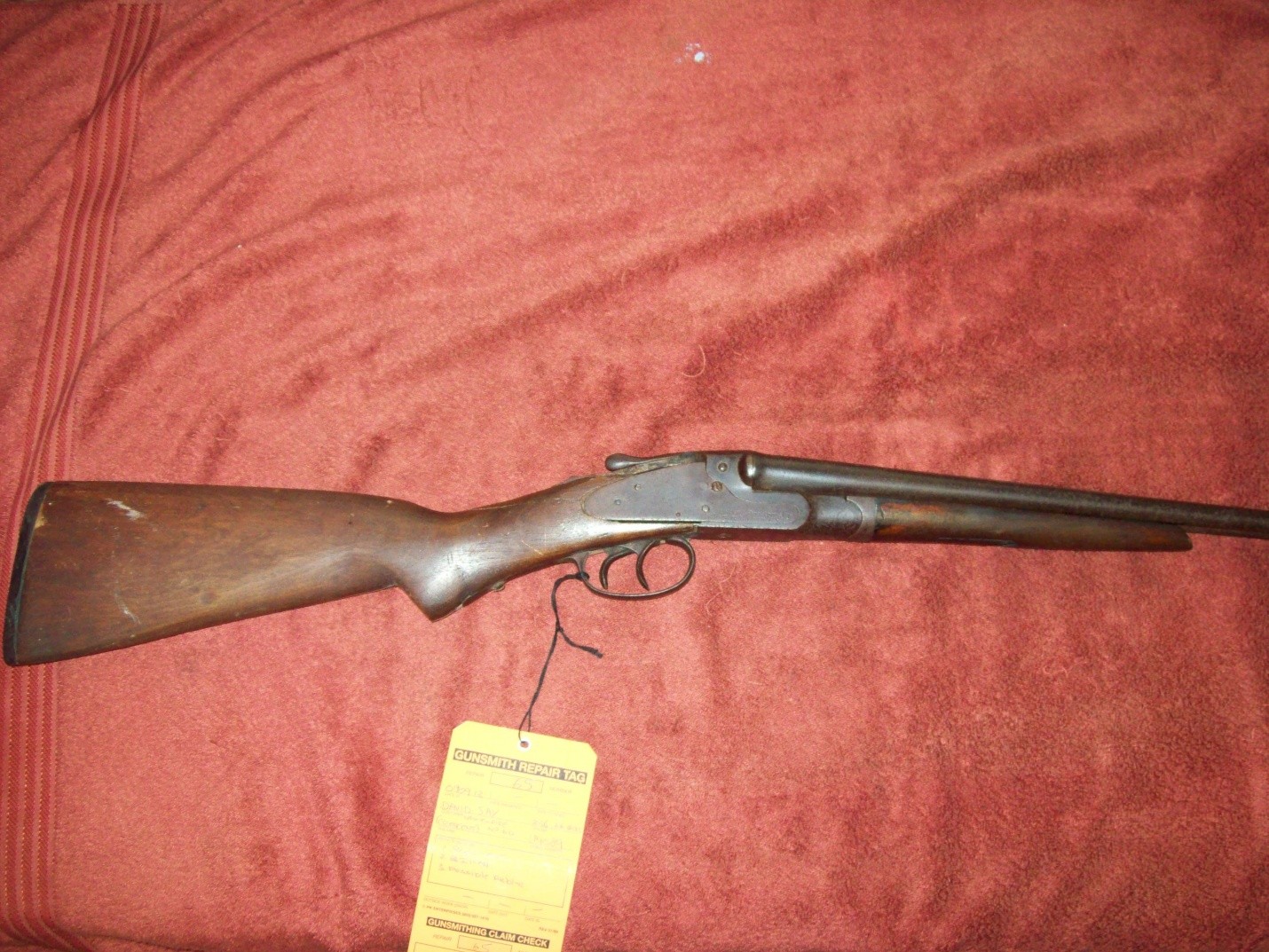
I had a job come in not long ago, a double-barrel side-by-side, older gun, no significant collector value but clearly something the owner had held onto. Worn finish, surface rust in the usual places, wood that had seen better decades. The customer told me it worked fine. Hadn’t been shot in a while but worked fine. I took him at his word.
I should not have taken him at his word.
The disassembly went smooth. The parts I was going to blue came apart clean. I stripped the metal, ran it through the sonic cleaner, polished everything out over several sessions. The receiver on a gun like that has contours that take time if you want the finish to look right, and I put the time in. The barrels came up well. The smaller steel parts came up well. I ran the whole package through the tanks and it came out looking like something worth keeping.
"You’ve done nothing more than put a $200 saddle on a $20 mule. Do not take even the customer’s word on this. Check the function of that firearm first."
Then I reassembled it and tested the function.
It didn’t work.
Not a small issue. Not something that might have developed during disassembly and could be traced back to my bench. The firing mechanism had a problem that had nothing to do with my work. It had been sitting in that gun before the customer loaded it in his truck and told me it worked fine. He believed it. He was wrong.
On a current-production gun or a common historical model, this is inconvenient. Parts exist. You find the issue, you source what’s needed, you repair it, you absorb some extra time. The customer is maybe surprised, maybe annoyed, but the situation resolves.
This gun was old enough that parts were not findable. Not at any distributor I called, not through any of the contacts I reached out to, not through the used parts market. The action problem in that gun was not going to be fixed without machining custom components from scratch, which is a cost that made no sense relative to what the gun was worth. I had just put a $200 saddle on a $20 mule. A beautiful saddle. Useless.
"The three Rs, in order: Repair if needed. Reblue when it’s ready. Return to the customer looking and working the way you’d want yours"
The customer conversation that followed was not pleasant. Not because either of us was angry, but because there was no good answer. The gun looked better than it had in decades and it still didn’t function. That is a specific kind of frustrating that is hard to hand back to someone.
I did not charge him for the bluing work. That was the only honest move available to me, even though the mechanical failure was not something I caused and was not part of the finish work. But I accepted the job without checking function first, and that made the outcome my problem.
Now I check function on every firearm before I touch the metal. Not because I doubt the customer, but because customers are not always right about their own guns, and because the cost of finding out after the bluing is done is always higher than the cost of finding out before. Five minutes on the bench at intake, working the action, checking lockup, and performing an appropriate function check with the customer’s consent. Five minutes that would have saved me hours of work and a customer I couldn’t fully make whole.
The three Rs, in order: Repair if needed. Reblue when it’s ready. Return to the customer looking and working the way you’d want yours.
The sequence matters. Bluing is the second step. Repair is the first. Don’t start the second step until you’ve confirmed the first one isn’t waiting for you.