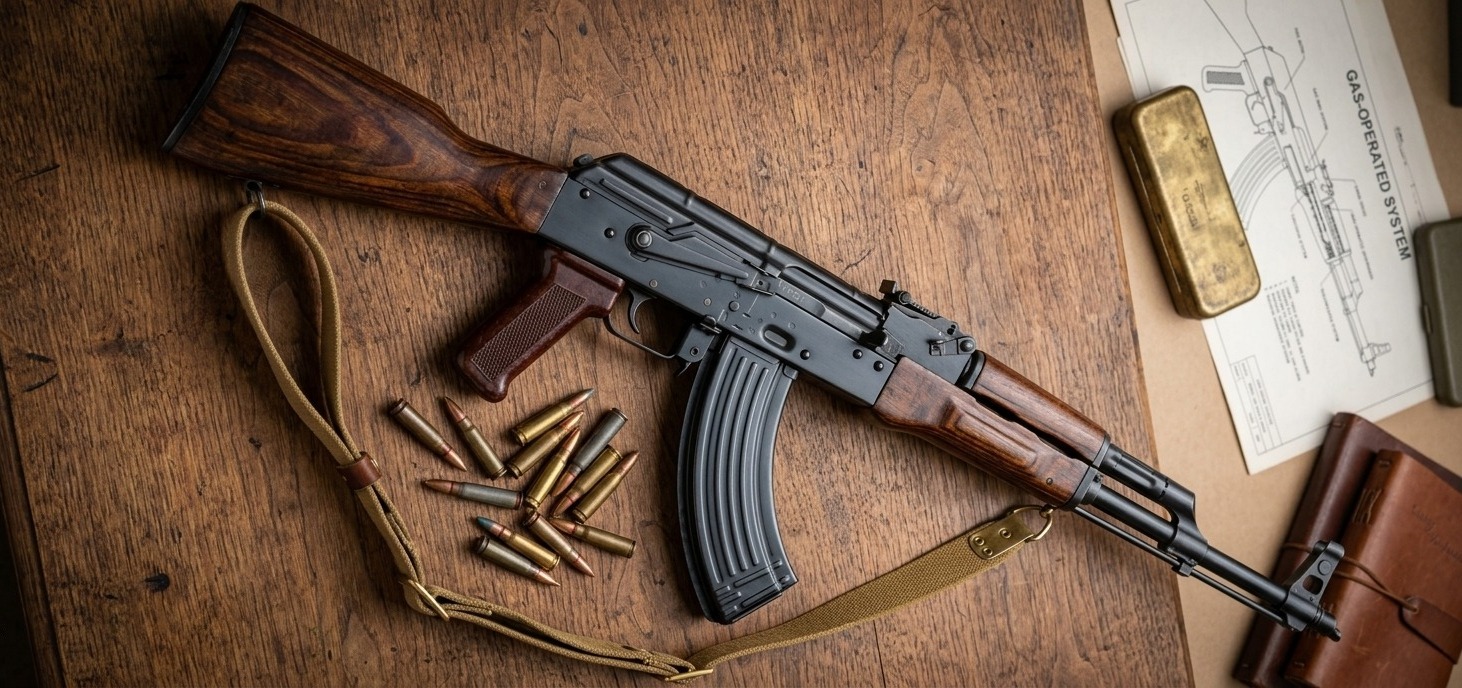
The rifle came in with a vague complaint. Century Arms Cugir WASR-10. Feeding issues. The owner could not identify a specific failure point. He knew it was not cycling reliably. He did not know why.
That kind of complaint points everywhere and nowhere at the same time. Before touching anything, the work is research. Study the platform. Know the schematics. Understand the feed cycle before chasing symptoms. That is how the diagnosis on this rifle came together.
Initial inspection covered the obvious. Bolt carrier group moved freely. Recoil spring assembly intact. Gas system clear. Chamber and bore serviceable. No extractor damage. No unusual wear at the bolt face. Nothing in the upper system explained the reported failures.
Attention moved to the magazine interface.
A standard magazine was inserted with the rifle secured. Immediate movement at the rear lockup point. Vertical play. Lateral looseness beyond normal tolerance. Under light upward pressure, the magazine seated correctly. Release it, and you could feel the rear lug settle lower.
That movement defined the problem.
"The latch is not a convenience feature. It is a positioning component. When that position is compromised, the rifle does not fail randomly. It fails predictably."
On the AK platform, the rear magazine latch sets the height and angle at which the magazine presents cartridges to the bolt. A small loss of engagement height shifts the feed angle outside the bolt's reliable pickup window. The bolt overrides cartridges or contacts them at incorrect angles. The problem is not intermittent. It is structural.
Close inspection of the latch showed material had been removed. Engagement surface visibly reduced. Edges rounded where they should be defined. The latch had been filed down.
This explained the behavior completely. The rifle was not failing due to a cycling issue in the action. It was failing because the magazine was not held in the correct position during the feed cycle.
Correction required replacement, not adjustment. The damaged latch was removed. A new latch was installed with correct engagement dimensions and fitted across multiple magazine types to confirm consistent lockup. Once seated, the magazine held at correct height with defined resistance and no perceptible vertical play. Manual cycling showed clean pickup throughout. Function checks confirmed reliable operation.
The repair restored the system to its intended geometry.
Most rifles that come in with this problem have already been fixed once. The latch gets filed to deal with tight magazines. The fit improves for a moment. Then the rifle starts failing under use. The issue is not the latch being too tight. It is the system losing the position it depends on.
The root cause of tight fitment is rarely the latch. Receiver tolerances, magwell geometry, and magazine manufacturing variation drive most fitment differences. Filing the latch to compensate destroys the engagement profile the system relies on. The rifle may function in static handling and fail completely under dynamic conditions.
"Tight magazine fitment is almost never the latch's fault. Filing it destroys the geometry you need most."
On magazine selection: Magpul MOE and USGI-spec steel like Bulgarian Circle 10 hold tighter dimensional tolerances than random surplus and eliminate most fitment issues before they start. If latch failure becomes a recurring problem on a given rifle, forged replacements from Red Star Arms or reinforced TAPCO catches are drop-in upgrades that resist wear without requiring modification.
Routine checks take minutes. Insert and remove magazines under controlled conditions before range sessions. Observe lockup. Check for movement. Cycle with dummy rounds to confirm consistent presentation. Catches latch wear before it becomes a feeding problem.
The customer was informed of the cause and corrective action. After replacement and verification, the rifle fed reliably. The system returned to stable function.
Study the platform first. The diagnosis follows from there.