Six shops. Same answer. None of them ran a gauge. Not one.
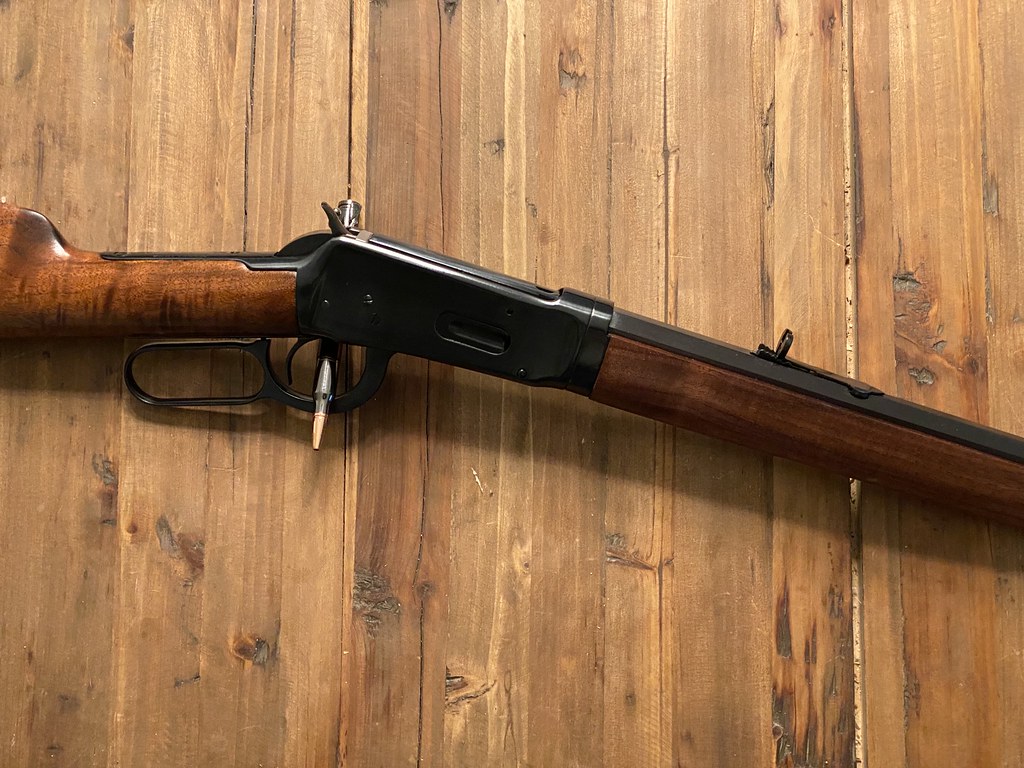
Late-1890s Winchester Model 94 Takedown. No stocks. Metal black from soot. Pulled from beneath a collapsed tin roof in the Blue Ridge Mountains of Virginia after the house burned down. The customer was in his mid-eighties. He had driven it to the shop himself, wrapped in a burlap feed sack. He had lived in that house his entire life. His older brothers had carried the rifle hunting when he was still too young to go along. He had watched them leave with it every fall. That was seventy years of memory in a sack.
Everyone he asked had told him it was gone. I do not make that call at the door. I make it at the bench.
What the fire actually did
The diagnostic sequence starts with temperature, not appearance. Appearance tells you what the fire touched. Temperature tells you what it broke.
The thresholds: above ~400°F, hardened components begin losing temper: sears, disconnectors, bolt faces. Above ~600°F, dimensional distortion becomes likely in the receiver. Above ~800°F, structural compromise. These are practical bench indicators, not published metallurgical absolutes. Platform, exposure duration, and heat distribution all affect the actual outcome. Use them as decision triggers, not certainties.Each threshold marks the metal in a way cosmetic damage does not
On this rifle, none of those signatures were present. No warping at the receiver tang. No bluing-to-scale conversion on the barrel flats. That transition from intact bluing to black scale is one of the cleaner thermal indicators on external metal. No crystalline surface texture on the action faces, which appears above approximately 700°F and looks nothing like ordinary oxidation under a 10x loupe. The bore gauged serviceable with a .30-caliber plug gauge. Core structure intact.
" The rifle looked ruined. It was not ruined. Appearance and condition are not the same measurement."
What rejection actually looks like
Before this job, a different rifle came in under similar circumstances: a pre-war bolt-action, house fire, customer convinced it could be saved. The cosmetic damage was comparable. The story was comparable.
It failed at step one. Receiver ring showed warping of .006" across the critical flat, three times the threshold. That level of distortion ends the job. Re-barreling not viable. Headspace not correctable. The receiver could not be machined without replacing its function entirely.
The customer got an honest answer and the rifle back. That is the job done correctly. There is no restoration that covers a structurally compromised receiver, and attempting one produces a rifle that will fail under use.
"Rejection is not a failure. It is the correct output when the measurement says stop."
Where this job nearly ended
After full strip and ultrasonic cleaning in heated alkaline solution, the bolt face showed pitting. Not surface oxidation. Actual pitting, uneven depth, in the face itself.
Light pitting gauging within headspace tolerance is manageable: polish out with a felt bob and Clover compound, verify with GO/NO-GO gauges, proceed. Pitting that has altered headspace dimension ends the restoration. A firearm with a compromised bolt face goes back to the customer and gets chambered. That risk does not get passed to him.
I gauged it with a Forster GO/NO-GO set. Cosmetic depth. Headspace within tolerance. Polished it out at low RPM, re-gauged, and continued.
One measurement. GO or NO-GO. That’s the whole job at this stage.
The restoration sequence
Every component assessed individually before anything is touched. No exceptions. These are the decision points, not the steps.
Disassembly and triage. Full strip. Ultrasonic cleaning. All springs replaced (mainspring, finger lever spring, magazine follower spring) regardless of apparent condition on a rifle this age. Brass components (elevator, carrier) assessed under magnification; heat-distorted parts replaced with period-appropriate replacements, hand-fitted using needle files and dial calipers. Retained components prepped for bluing.
Barrel work. Half-octagon, half-round profiles do not tolerate machine work at the transition zone. Octagon flats draw-filed by hand with a 10-inch mill bastard file; flatness checked with a Starrett 18-inch straightedge at every fourth pass. Round section worked through 220 to 600-grit wet/dry, each grit perpendicular to the last. Any deviation at the transition reads through the bluing. There is no correcting it after the tank.
Action work. Receiver flats and lever interface filed, stoned with an India fine stone, polished. The constraint is narrow: remove contamination without touching functional geometry. Overwork the receiver flats and the lever-to-receiver fit changes. Feedback is tactile, surface consistency felt by hand and confirmed with a straightedge.
Bluing. Hot caustic: sodium hydroxide and potassium nitrate at 285–295°F. Not cold blue. Any defect in the metal when it enters the tank is permanent; the tank will find it and hold it. Barrel, receiver, and small parts blued in sequence. Final color: deep blue-black, consistent across flats, rounds, and the transition zone.
Stocks. New walnut blanks inletted to this receiver by hand: 1/4-inch curved inlet chisel, inlet black to identify high spots. Finished with raw linseed oil cut with mineral spirits, built across multiple coats. Takedown interface fitted tight. Looseness at that junction produces play detectable on first handling.
Why this work does not appear on most benches
My father came to gunsmithing after a machine shop career and formal chemistry training. I worked at his bench before I had my own. The draw-filing, the bluing chemistry, the metallurgical triage. Decades of it. None of it certifiable. None of it fast to replace.
What this category requires, and where most shops step out:
Hand machining for period-correct geometry at transition zones not accessible to machines
Hot bluing capability with the surface prep discipline the process demands
Parts sourcing for pre-war platforms with non-standard dimensions
Willingness to accept a job where a mid-process finding ends it
That last point is the real filter. A restoration that looks viable at intake can fail mid-process: pitting deeper than the surface, a receiver dimension that matches no available part, internal heat damage invisible until cleaning. A shop that cannot absorb that outcome should not take the job. Abandoning it halfway is worse than declining at the door.
What happened when I returned it
The customer was quiet when I handed the rifle back. He set it across his forearms the way you carry something that weighs more than its parts. After a moment he brought out eight more firearms, all Winchesters, all from the same fire. One was a shotgun his father had given him as a teenager, the first time he was trusted with a gun in the field. He did not need to explain what that meant. I took them all in.
Walking back to the truck I could hear him through the door, speaking to it, or through it, the way a person speaks to someone they thought they had lost. The assessment made that possible. The gauge made that possible. Fifty cents of tool time against eighty years of a man’s life.
Intake checklist: fire-damaged firearms
Sequential. Non-negotiable. Each step is a gate. Fail it and nothing downstream matters.
1. Receiver geometry. Starrett or equivalent straightedge across all critical flats. Warping beyond .002" at the receiver ring or tang is structural. Stop.
2. Surface texture. Crystalline or granular scaling under soot indicates temperatures above 700°F. Smooth soot over intact surface means survivable exposure. Visually distinct under a 10x loupe. Learn the difference before you need it.
3. Bore. Plug gauge at chamber, mid-barrel, and muzzle. Heat distortion reads as non-uniform diameter. Pitting is a separate assessment. Do not conflate the two failure modes.
4. Bolt face and headspace. GO/NO-GO gauges. Not estimation. Pitting that has altered headspace beyond tolerance stops the restoration. Cosmetic pitting within tolerance is workable: polish, re-gauge, proceed.
5. Springs and brass. Replace all springs regardless of appearance. Assess brass individually under magnification. These are consumables in a full restoration. Failures after return are yours.
Most customers who walk in with fire-damaged firearms already believe the piece is gone. Your job is not to confirm that. Your job is to determine whether it is true.
The cost conversation follows the assessment. The bill will exceed open-market value. Most customers proceed anyway. They were never asking about market value.
Inspect before you decline.
Know the difference between cosmetic failure and structural failure. The bench tells you which it is. A glance does not.
Put it on the bench. Run the gauges. Then decide.