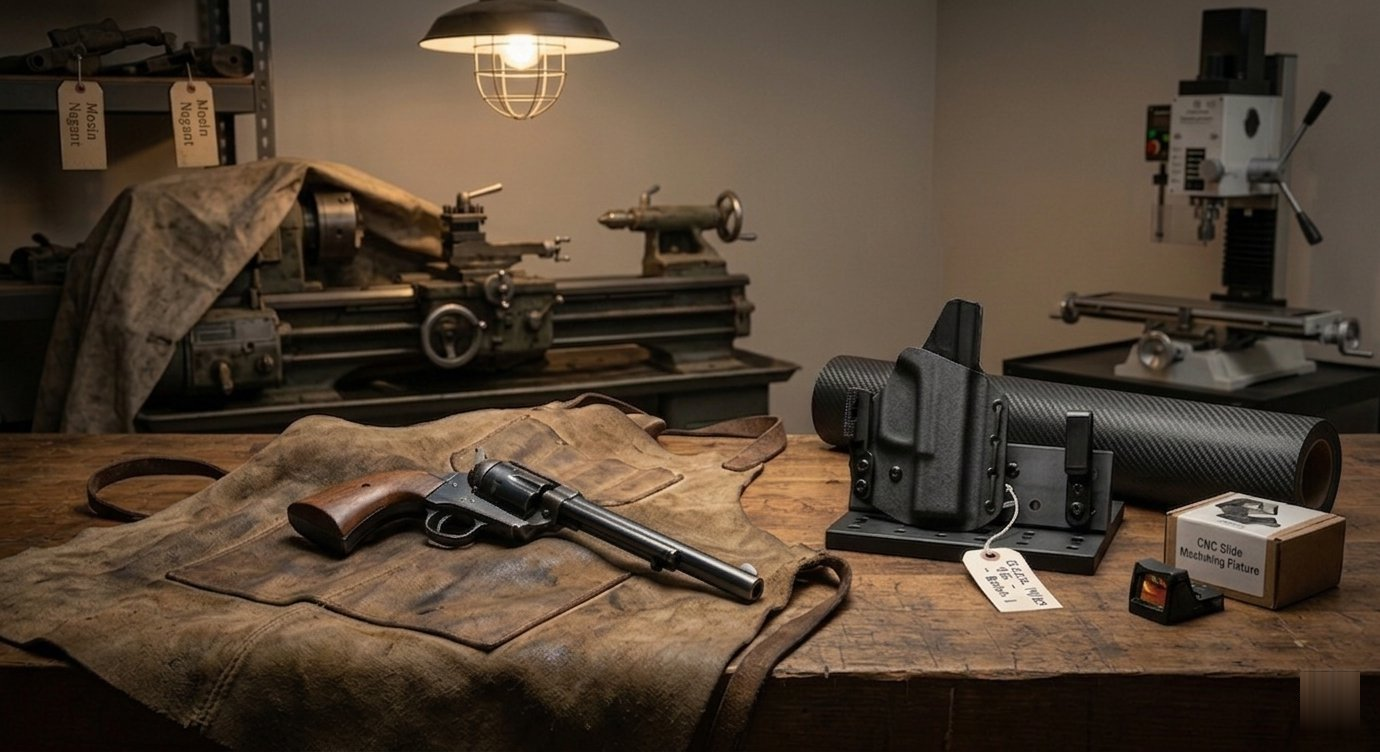
Most gunsmiths who read 'specialize or die' already know it is true. They have known it for a while. The problem is not the diagnosis. The problem is Monday morning what do you actually do differently, in a shop with existing customers, existing overhead, and a bench full of tags that represent the old model you are trying to leave behind. That is the conversation nobody is having, and it is the one that matters most.
The shift from generalist to specialist is not an event. It is a managed transition that takes most shops twelve to thirty-six months to complete without destroying cash flow in the process. The ones I have watched do it well followed a pattern that was not intuitive. They did not stop taking general work on day one. They did not make a dramatic announcement. They quietly changed what they said yes to, tracked what the numbers told them, and let the shop's identity follow the revenue rather than the other way around.
"The mistake is trying to specialize all at once. The shop that survives the transition is the one that makes the shift gradually enough to fund it."
The first move is diagnostic, not strategic. Pull every job tag from the last ninety days and sort them by revenue, time on bench, and whether you would take that job again at that price. Most shops have never done this. Most shops are surprised by what they find. The work that feels busy the steady stream of small repairs, warranty jobs, and walk-in estimates rarely accounts for more than thirty percent of gross revenue when you actually run the numbers. The work that feels slow the builds, the restorations, the complex jobs that required real thought almost always punches above its weight on the revenue line. That gap is the business case for the shift, and it is more persuasive than any editorial argument I can make.
What you are looking for is your top-twenty-percent revenue work. Not your most frequent work. Your most valuable work. In most shops those are not the same list. Identify it, name it, and write it on the wall. That is your target specialization, refined by what the market has already told you it will pay for.
"Your best customer is already telling you what to specialize in. Most shops are too busy with the wrong work to hear it."
Once you know the lane, you do not abandon everything else immediately. You enter a hybrid phase where you continue taking general work but begin pricing it honestly. Most general repair work in this trade is underpriced by fifteen to thirty percent when you account for actual bench time, overhead, and the opportunity cost of a qualified smith doing work a parts changer could handle. Raising prices on low-margin work does one of two things: it either improves the margin enough to make the work worth keeping, or it drives the customer elsewhere and frees the bench time for higher-value jobs. Both outcomes are acceptable. The only outcome you cannot afford is continuing to do low-margin work at low-margin prices while telling yourself you are too busy to build the high-value book.
The most useful thing you can do during the hybrid phase is build a kill list. Look at the bottom thirty percent of your job tags by revenue per bench hour. Name the work types. Those categories are what you are pricing out or referring out over the next twelve months. Not immediately the cash flow cannot absorb a sudden volume drop but systematically. When that work routes to another shop, you are not losing it. You are moving it to the bench it belongs on. That is not a loss. That is the routing system working.
During the hybrid phase, deposits become non-negotiable. Specialty work custom builds, restoration, precision machining carries real material cost and significant bench time commitment before a dollar of final payment arrives. A shop running six-month lead times on custom builds without deposit structures is lending money to its customers at zero percent interest while struggling to cover monthly expenses. Fifty percent down at intake, balance at completion, is not aggressive. It is standard for any skilled trade with long-cycle work. If a customer balks at a deposit on a $5,000 build, that is information about the customer, not about your pricing.
The tooling question is where most transitions stall. Specialization requires investment, and the investment required depends entirely on the lane. Precision long-range work requires a quality lathe, chambering equipment, and the gauging to back it up realistic entry cost in the range of $40,000 to $80,000 for a properly equipped station. Suppressor service requires specific tooling and the SOT, but the recurring revenue model on service contracts makes the payback period shorter than most smiths expect. Vintage restoration is tooling-light but knowledge-heavy, which makes it accessible to experienced generalists who already have the hand skills and simply need to stop diluting them with commodity work.
The ROI calculation on specialized tooling looks different than it does on general-purpose equipment precisely because the revenue per job is different. A lathe that enables $4,000 to $6,000 precision builds pays back faster than the same lathe used for $150 barrel threading jobs not because the equipment costs less, but because the revenue per hour of capacity is three to four times higher. The investment case for specialization tooling is not complicated once the work mix data supports it. The mistake is buying the equipment before the demand is confirmed. Prove the demand with the hybrid phase first. Invest when the calendar justifies it.
"Do not buy the lathe before you have the customers for it. Prove the lane first. Equip it second."
Managing existing customers through the transition is the part that makes most shop owners uncomfortable, and it should not. Your general repair customers are not entitled to your specialty rates or your specialty attention forever. The ones who value the relationship will follow you into the new model or refer you the work you actually want. The ones who disappear when you raise prices or extend lead times were never profitable customers to begin with. I have watched shops lose forty percent of their transaction volume during a specialization shift and increase gross revenue by sixty percent in the same twelve months. The math works because transaction volume and revenue are not the same number, and most generalist shops are confusing one for the other.
The harder conversation is with customers who have been coming to the same shop for twenty years and expect that to mean something. It does mean something. It means they deserve a clear explanation and an honest referral to another shop that can serve their needs. A gunsmith who specializes in precision long-range builds and tells a customer with a factory rifle warranty issue where to go has done right by that customer. Protecting a relationship does not require taking work that does not belong on your bench.
The last phase of the shift is identity what the shop is known for, inside the trade and to the customers who matter. This takes longer than the revenue shift and cannot be forced. Reputation in this trade moves through word of mouth between smiths, between competitors who refer work they cannot take, and between the serious shooters who talk to each other at matches and on forums. The signals that build it are specific: work that peers acknowledge as exceptional, a calendar that is genuinely difficult to get onto, a name that comes up when someone in a forum asks who to call for a particular job. A backlog is not a scheduling problem. It is the most credible thing a specialist can show a new customer. It means others already decided he was worth waiting for. A shop that has made the shift but has no presence beyond its local zip code is still leaving national demand unserved. The specialist's market is not local. It should not be treated as if it is.
The shift is manageable. It is not painless, and it is not fast, but it is not a gamble either. The data in your own job tags will tell you where to go. The hybrid pricing strategy funds the transition without destroying cash flow. The kill list removes the drag. The tooling investment follows the confirmed demand. The customer base rebalances toward the work that actually sustains the business. And the reputation follows the work, over time, in a trade where reputation is the only marketing that has ever worked.
The shops that will not make the shift are not the ones that lack skill. They are the ones that will not look at the numbers, will not build the kill list, will not have the uncomfortable pricing conversations, and will not tolerate the temporary disruption of a transition that was already overdue. Every month they wait is another month of bench time spent on work that pays less than it costs, building a reputation for the wrong thing, and falling further behind the shops that moved first.
The trade will not miss the work they were doing. But they will miss the decade they spent doing it.